

 by Carla1
Relocation deep dive: How remote work is reshaping Baja’s property market
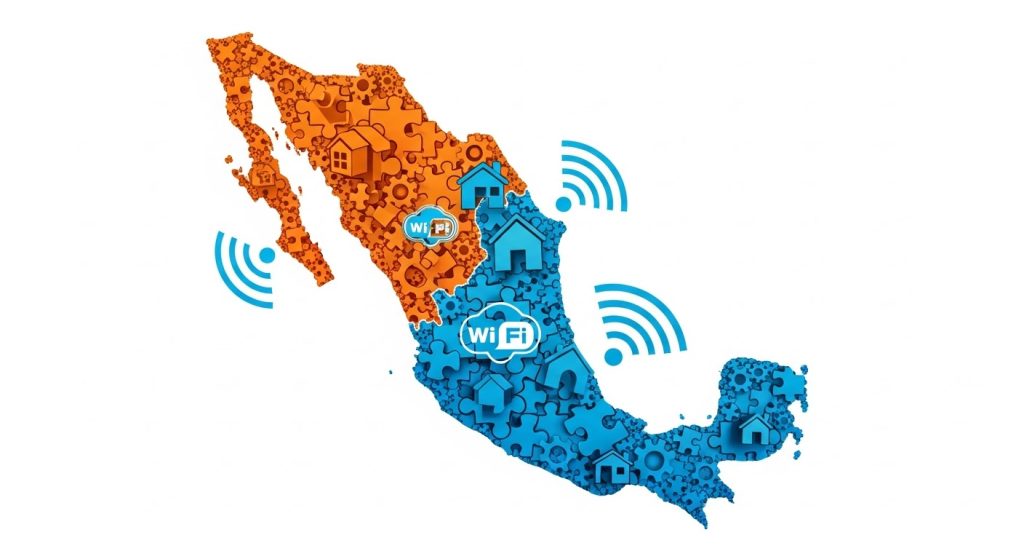
Remote work didn’t just add a new buyer cohort to Baja—it changed how demand shows up (longer stays, higher amenity expectations, more “try-before-you-buy” rentals) and where it concentrates (border metros and resort corridors). The result is a peninsula that increasingly behaves like two connected—but distinct—property markets:
- Baja California (north): Tijuana–Rosarito–Ensenada as a cross-border “affordable coastal metro” for U.S.-paid professionals.
- Baja California Sur (south): Los Cabos–La Paz–Todos Santos as a “work-from-resort” lifestyle market where tourism and remote work blend.
Below is what’s changing, why it matters, and what to watch if you’re analyzing a relocation or investment thesis.
Southern Baja: “Work-from-anywhere” meets global resort demand
In Baja California Sur, Los Cabos and La Paz have seen rapid population growth and intense infrastructure strain, which is increasingly relevant to real estate underwriting.
- Los Cabos’ population was 351,111 in 2020, up 47.2% vs. 2010, per Mexico’s Data México profile.
- Local reporting and municipal planning discussions tie growth to water deficits and major desalination/infrastructure projects—issues that directly affect development timelines, operating costs, and risk premiums.
Product is being redesigned for remote work (and priced accordingly)
Remote-work buyers and long-stay renters reliably bid up the same features, which developers and remodelers now treat as “must-haves”:
- Redundant internet (fiber where available + Starlink/backup)
- Home office alcoves (or second bedrooms marketed as offices)
- Soundproofing, blackout treatments, and AC
- Walkability + services (cafés, gyms, healthcare), especially in La Paz and central corridors
- Secure parking + storage (especially in border markets with frequent crossings)
This is why you see more condo inventory and amenitized communities targeting “live/work” rather than purely “vacation.”
Rentals are the new front door to ownership
Remote work encourages a “rent first, buy later” funnel—particularly in Baja California Sur—because a buyer can live locally while keeping their job. That raises rents and also creates a steady pipeline of future purchasers.
The Los Cabos case: STR and “mid-term” converge
Air DNA’s Cabo San Lucas market snapshot shows 8,300 active listings, with meaningful “monthly stay” behavior: ~20.7% of listings have 30+ night minimum stays, alongside high rates and occupancy metrics (e.g., ~44% occupancy and ~$717 ADR in the snapshot).
That mix matters because:
- It blurs the line between short-term rentals and remote-work monthly rentals.
- It tends to raise the rent floor for locals and seasonal workers.
- It increases investor appetite for properties that can flex between STR and extended stays.
Policy response is starting to follow the pressure
Mexico City’s gentrification backlash has been explicitly linked in reporting to digital nomads, tourism, and short-term rentals—often a precursor signal for broader regulatory experimentation in other high-demand markets.
In Baja California Sur specifically, the state congress has discussed housing/rent pressures and proposed rental-regulation concepts. In a published congress bulletin, a legislator claimed housing prices rose 80%+ in four years and referenced La Paz rents around MXN 10,000–15,000/month in 2024, framing it as displacement risk.
(That’s a political statement—not a market-statistics release—but it is a clear signal of regulatory intent.)
Infrastructure is now a valuation factor (especially in BCS)
Remote workers are less tolerant of service instability (water, power, connectivity) because housing is also a workplace. In Los Cabos, water scarcity has moved from a background concern to a headline risk, with ongoing desalination plans and deficits discussed in local reporting.
Practical implications for pricing and due diligence:
- Higher HOA fees and capex for water storage, pumping, filtration
- Greater dispersion between “turnkey” inventory and older stock
- Increased importance of developer execution risk (permits, utilities hookups)
On the demand side, tourism intensity still supports pricing power. The Los Cabos Tourism Observatory reports substantial air activity and a tourist mix heavily weighted to U.S. travelers (and strong Canada growth in the cited period), reinforcing the demand base that overlaps with remote-work extended stays.
Remote-work tailwinds are real—but they’re evolving
It’s important not to underwrite 2021–2022 conditions indefinitely. Reporting in 2025 emphasized a cooling of the “always-on-the-road” digital nomad phenomenon as more firms tighten location flexibility and return-to-office policies expand.
What that means for Baja:
- The market is shifting from transient nomads to semi-permanent relocators (multi-month stays, school-year leases, second homes used more frequently).
- Demand becomes more sensitive to: schools, healthcare access, neighborhood livability, and infrastructure reliability—again pushing pricing toward higher-quality submarkets.
Legal and residency mechanics: why Baja is structurally “frictional” (and why that supports pricing)
Two realities shape buyer behavior and transaction costs in Baja:
Foreign ownership rules in the “restricted zone”
Large parts of Baja are within Mexico’s constitutionally defined restricted zone (near coasts/borders). Mexico’s consular guidance explains that foreigners can buy in this zone via a bank trust (fideicomiso) structure for residential property, rather than holding direct title.
That adds:
- Ongoing trust fees and bank process timelines
- Higher need for competent closing counsel and title review
But it also reduces “speculator churn” versus markets with simpler conveyance, which can support sticky pricing in prime areas.
Stay duration: visitor permits vs. temporary residence
- Mexico’s visitor permit (FMM) has a maximum validity of 180 days. Instituto Nacional de Migración+1
- For longer stays, many remote workers pursue temporary residence; consulates publish financial-solvency thresholds (for example, the Tucson consulate lists specific income/balance figures in its guidance). Consulados de México
These mechanics matter because they influence the size of the “can relocate tomorrow” buyer pool.
What to watch next (Baja-specific leading indicators)
If you want to track whether remote work continues to “reprice” Baja, these are the most decision-useful signals:
- Border metro appreciation vs. national trend (watch Tijuana within SHF-reported summaries). El País+1
- STR supply and monthly-stay mix in Los Cabos (listings count + 30+ night minimum share). airdna.co
- Los Cabos infrastructure execution (desalination timelines, water deficit commentary). Mexico News Daily+1
- Regulatory posture in BCS (rent regulation proposals and enforcement capacity). cbcs.gob.mx
- Air connectivity and visitor composition (airport operations and source markets). FITURCA
- Employer policy drift (remote work tightening vs. stabilization). Business Insider
Practical takeaway
Remote work is reshaping Baja less by creating a single “boom,” and more by changing the duration, expectations, and conversion funnel of demand:
- North Baja gets cross-border wage power + hybrid flexibility → higher pressure on rents/prices near Tijuana/Rosarito/Ensenada.
- South Baja gets tourism-backed luxury + long-stay remote living → stronger amenity premiums, higher STR-to-midterm blending, and infrastructure-driven bifurcation.